
Top 10 Early Years Songs to Sign with Makaton
Top 10 Early Years Songs to Sign with Makaton
Top 10 Early Years Songs to Sign with Makaton
There has always been a lot of singing in our house.
I've sung and signed with Raph since he was little, and many of the songs on this list have been part of our lives for years. He's definitely had his favourites - and although he's an adult now, we still sing and sign many of them together today.
Later, when I ran my Sing, Sign and Storytime groups, I got to see which songs other children returned to again and again. Some were requested so often that there was simply no getting away with leaving them out!
I've also delivered Using Makaton with Singing workshops for many years, exploring how signing can be used alongside songs. But this isn't a list of songs from the workshop. These are my own ten favourites, chosen from years of singing and signing with Raph and with children in my groups.
And for me, singing with Makaton has never just been about learning the signs that go with a song.
Songs can create opportunities to choose, take turns, anticipate what comes next, explore concepts, make sounds, move, play and simply enjoy being together. Props, symbols, instruments, recorded sounds and actions can all give someone another way to join in.
And sometimes we don't sign at all.
So here are my ten favourite early years songs to sign, along with some of the ways I've used them over the years.
- Old MacDonald Had a Farm
This was always a firm favourite at my Sing, Sign and Storytime groups - and probably my number one song for signing with young children.
One of the great things about Old MacDonald is that you can sing it in different ways. Keep it simple by singing about one animal at a time, or make it more challenging by adding each new animal and repeating the ones that came before, building memory and sequencing along the way.
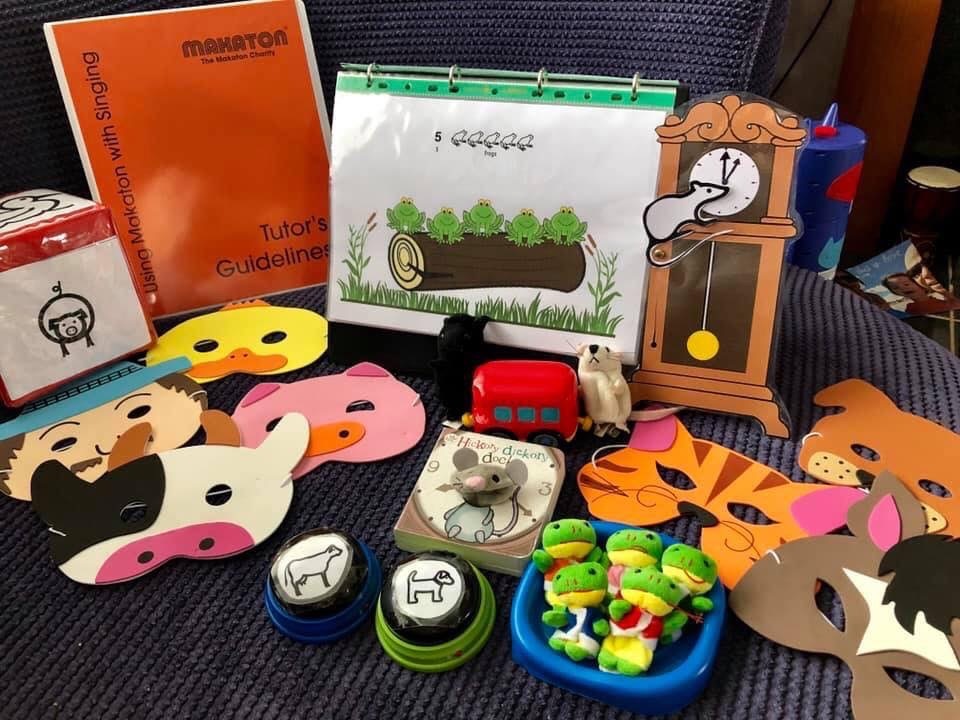
And there are so many ways for children to join in. They can sign or say the animal, make the animal noise, point to a picture or symbol, or choose what comes next. We sometimes used recordable buttons with animal sounds on them too, so a child could join in by pressing the button at just the right moment.
Make it interactive
I used a dice with animal symbols on each side - roll the dice and that animal gets the next verse. Another favourite was putting animal symbols onto lolly sticks. Children could choose an animal and add it to our cardboard-box farm as we sang.
Animal masks, puppets, soft toys and farm animals all work brilliantly too. There are so many props available for this song – and many of them can be brought out again for other animal songs and stories.
Communication opportunities: choosing • turn-taking • anticipation • memory and sequencing • animals • joining in in different ways
- The Wheels on the Bus
Everyone likes a bus! This is such a familiar song and its repetitive structure makes it easy to join in with. There are lots of opportunities for actions and signs, and you can add different people and events to create as many verses as you like.
Of course, that's also the problem with The Wheels on the Bus - it can go on and on and on!
I always included the Signing Hands version of a final verse where the bus goes to sleep. As well as being a lovely calm ending, it gave the children a clear signal that the song was finished. When an activity could otherwise continue indefinitely, having a predictable ending was really useful.
You can use a toy bus, pictures or symbols to choose who is going to be on the bus or what happens next. Children can also take turns choosing the next verse.
Communication opportunities: repetition • anticipation • choosing • turn-taking • people • actions • understanding when an activity is finishing
- Sleeping Bunnies
Sleeping Bunnies is brilliant for anticipation, movement and playing with volume.
The sleeping part can be sung very softly as everyone lies down and pretends to sleep. Then comes that wonderful moment of anticipation as we wait for the bunnies to wake up - before suddenly changing to a much louder voice as everyone hops!
That contrast between quiet and loud, sleeping and waking, and still and moving gives children lots of clues about what is happening and what is coming next.
And you don't have to be able to sing or sign the whole song to take part. A child might lie down, make the sign for SLEEP, wait for the exciting bit, or simply join everyone else in hopping when the bunnies wake up.
Make it interactive
Really exaggerate the change in volume and pace. Give plenty of time for the quiet sleeping section and build the anticipation before the bunnies wake. Don't be afraid of a pause - waiting for that big moment is part of the fun.
Communication opportunities: anticipation • quiet and loud • sleep and wake • movement • joining in • waiting • copying actions
- Ten Fat Sausages
This one has to be included because it was always one of Raph's favourites!
Ten Fat Sausages is a great maths song, with lots of repetition, counting and anticipation - especially waiting for that all-important BANG!
You can count the sausages down in twos or change the song and count them down one at a time. Ten can also be a lot when you're just beginning to understand number, so there's absolutely nothing wrong with starting with Five Fat Sausages instead.
Using props makes the counting much more meaningful. Start with the sausages where everyone can see them and physically take them away as the song progresses. It helps make the idea of one less or two less visible rather than relying on the words of the song alone.
And, of course, everyone can join in with the BANG! – whether that's through speech, a sign, an action or a sound.
Communication opportunities: counting • number • one/two less • anticipation • repetition • joining in • adapting an activity to the individual
- Miss Polly Had a Dolly
Miss Polly Had a Dolly is really a tiny story set to music, which makes it lovely for sequencing. There's a beginning, a problem, something happens next, and then an ending.
There are lots of different versions of this song, with slightly different words and actions, so use the version that works for you. In my version, the doctor is always a woman – a small update to the traditional lyrics!
The story also lends itself brilliantly to props and acting it out. A doll, toy telephone and doctor's bag can turn a very simple song into a little role-play activity. Children can phone the doctor, examine the poorly dolly, knock on the door or decide what she might need to feel better.
You can also pause at familiar points and give children the opportunity to anticipate what happens next.
Make it interactive
Try acting out the story as you sing, or use objects, pictures or symbols to represent the different parts. Once the song is familiar, put them in order and use them to retell the story afterwards.
Communication opportunities: sequencing • anticipation • pretend play • people • actions • understanding a simple story • retelling
- Dingle Dangle Scarecrow
Dingle Dangle Scarecrow is a wonderfully physical song. Children can join in with their whole bodies - stretching, shaking and moving as the scarecrow comes to life.
There are several different verses available, so you can make the song as short or as long as suits your group. You can stick with a familiar favourite or gradually introduce additional verses as children get to know the song.
Like Sleeping Bunnies, it's also great for exploring changes in volume. Singing softly during the quieter parts and then getting louder when the scarecrow springs into action adds another layer of anticipation and fun.
The big movements make this a particularly accessible song. Joining in doesn't have to mean singing every word or making every sign – copying an action, changing your movement with the music or joining in with a favourite part are all ways to participate.
Make it interactive
Really exaggerate the contrasts: still and moving, quiet and loud, small movements and great big ones. A scarecrow prop, hat or simple dressing-up item can add to the fun too.
Communication opportunities: whole-body participation • copying • anticipation • quiet and loud • movement • action words • choosing different verses
- Incy Wincy Spider
Incy Wincy Spider is short, repetitive and very visual, with actions that naturally help to tell the story as you sing.
It's also a lovely introduction to weather. We have the rain coming down and the sunshine coming out again, giving you an opportunity to explore weather words and concepts beyond the song itself.
And you don't have to stop with the traditional verse. There are other verses and variations available, so once children know the familiar version you can extend the song or introduce something new.
Make it interactive
Try adding a toy spider or make a simple drainpipe for Incy Wincy to climb. Weather pictures or symbols can extend the activity too – what's the weather like in the song, and what's the weather like today?
Communication opportunities: weather • rain and sun • up and down • sequencing • repetition • actions • anticipation
- Row Row Row Your Boat
Row Row Row Your Boat is a lovely song for singing with someone rather than performing to them – and there are so many different verses you can use.
Sometimes I choose not to sign this one. Or, more accurately, Raph chooses! Instead, we hold hands and row backwards and forwards together. That pulling movement through the arms gives great sensory feedback and turns the song into a shared physical experience.
There are lots of additional verses, so you can keep going for as long as everyone is enjoying it. But we always finish with the crocodile verse – complete with a scream! Apart from being fun, it gives a familiar and very definite signal that the song has finished.
Communication opportunities: shared interaction • movement • anticipation • sensory feedback • repetition • choosing how to participate • recognising an ending
- I Am the Music Man
I Am the Music Man gives children plenty of opportunities to make choices, make sounds and influence what happens next.
I used a basket of instruments so children could choose what we were going to play. The instrument they selected could determine the next part of the song, giving them a real reason to communicate a choice.
There's plenty of repetition, but there's also plenty of noise! Children can join in by signing or saying the instrument, choosing one from the basket, playing it, copying a rhythm or simply contributing to all those wonderful instrument sounds.
Make it interactive
Put a selection of instruments where everyone can see or reach them and let the children lead. You don't need a huge collection – a few contrasting instruments can give plenty of choices.
Communication opportunities: making choices • turn-taking • listening • sound • instruments • copying • cause and effect • leading the activity
- I Can Sing a Rainbow
We actually call this one Sign a Rainbow
After all that hopping, banging, rowing and playing instruments, sometimes you need something a little calmer!
I Can Sing a Rainbow is a lovely opportunity to explore colour vocabulary, and adding something visual makes it even more accessible. I like using coloured ribbons or scarves that children can hold, wave or choose as we sing.
You can bring out each colour as it appears in the song, let children choose a colour, match colours together or simply enjoy watching and moving the scarves.
It's also a useful reminder that signing activities don't always need to be busy and energetic. A slower, calmer song can provide a change of pace while still offering lots of opportunities to communicate and participate.
Communication opportunities: colours • choosing • matching • looking and listening • movement • visual attention • calm shared interaction
About the author
Nic Pike is Director of Better Communication Together CIC and a Licensed Makaton Tutor and Tutor Training Facilitator. She writes about Makaton, accessible communication and inclusive practice, drawing on over 40 years' professional experience and lived experience as a parent of a Makaton user.
© 2026 Better Communication Together CIC. All rights reserved.
This article is provided for personal learning and information. Please link to this page rather than copying or republishing the content.
Tags:
One comment I hear surprisingly often is that Makaton is "too limited."
In my last blog, we explored the Makaton Core Vocabulary and why it focuses on the concepts people use most often.
But the Core Vocabulary is only part of the Makaton Communication Programme.
So what happens when someone wants to talk about hospitals, gardening, Christmas, jobs or STEM?
That's where the Resource Vocabulary comes in.
What is the Resource Vocabulary?
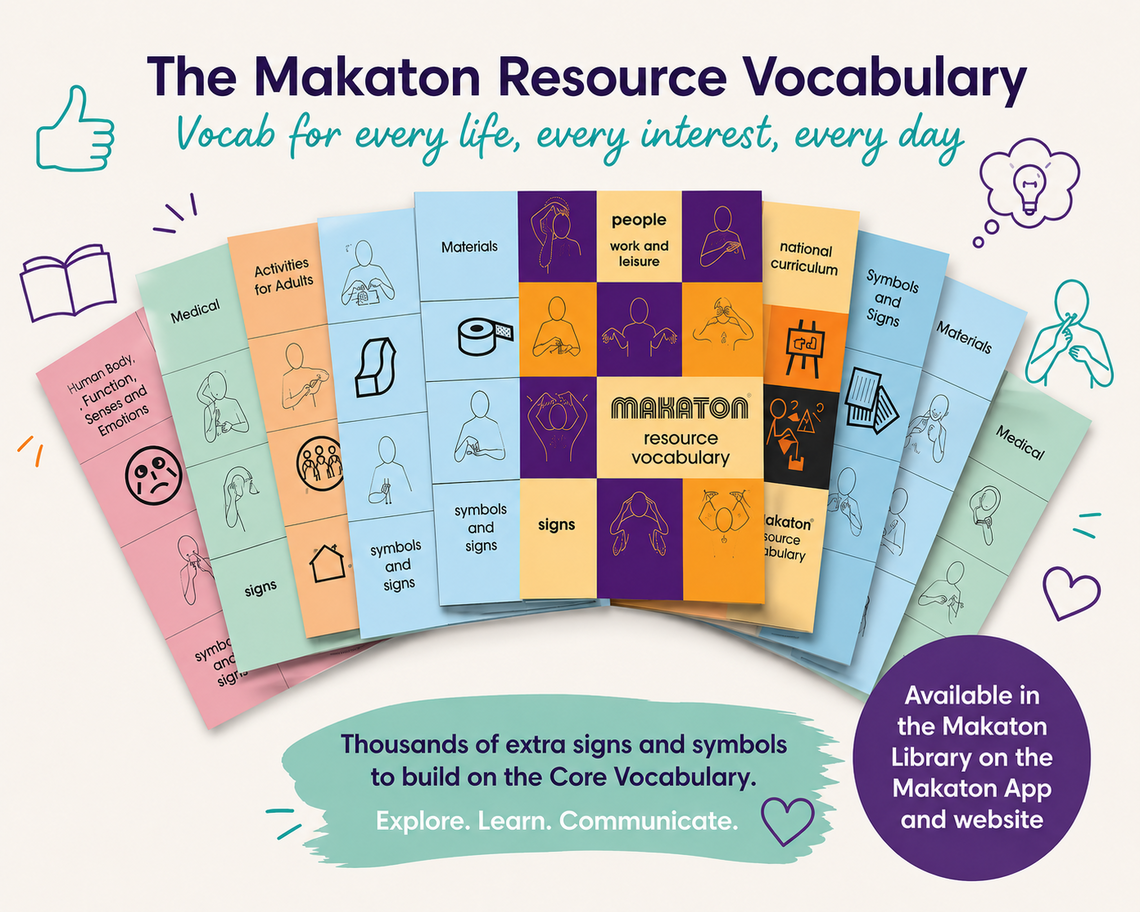
The Resource Vocabulary is the collection of additional concepts that sit alongside the Core Vocabulary.
While the Core Vocabulary provides the foundation for everyday communication, the Resource Vocabulary allows communication to expand as a person's interests, experiences and life change.
It's not a separate system.
It's an extension of the same Communication Programme.
Why isn't everything in the Core Vocabulary?
The Core Vocabulary deliberately focuses on the concepts that give people the greatest communication power.
There's no need for everyone to learn every possible concept from day one.
Instead, people learn new vocabulary when it becomes meaningful and useful to them.
That's exactly how spoken language develops too.
What sort of concepts are included?
The Resource Vocabulary contains thousands of additional published concepts covering all sorts of topics.
For example, there is vocabulary relating to:
- healthcare
- education
- employment
- food and drink
- transport
- hobbies and leisure
- religion
- weather
- feelings
- places
- seasonal events
As new communication needs emerge, new concepts can also be developed and published.
Did you know?
Makaton Membership gives you access to over 40,000 signs, symbols and video tutorials through the Makaton Library on the website and the Makaton App, making it easy to search for vocabulary whenever you need it. Find out more by visitng Makaton.org
It grows with the person
One person's Resource Vocabulary might include signs they use every day at work.
Another person's might reflect their faith, favourite hobbies or health needs.
Someone learning Makaton doesn't reach a point where they've "finished."
Like all language, vocabulary continues to develop throughout life.
The aim isn't to know every concept.
It's to have the concepts you need.
Final thoughts
The Makaton Core Vocabulary gives people a strong foundation for communication.
The Resource Vocabulary builds on that foundation, allowing communication to grow alongside the individual.
Together, they form the Makaton Communication Programme - supporting communication from first signs through to the changing needs of everyday life
If you're a Makaton Member, you'll find thousands of additional signs, symbols and resources in the Makaton Library, all searchable through the website or the Makaton App. Membership also includes video tutorials, downloadable resources and regular new content. Makaton Membership
Whether you're looking for vocabulary to support work, hobbies, healthcare, education or everyday life, the Resource Vocabulary helps communication continue to grow long after the Core Vocabulary.
What Is Makaton Core Vocabulary?
Everyone has a core vocabulary - even people who do not use Makaton.
It is the relatively small collection of words and concepts that we rely on repeatedly in everyday communication. These are the building blocks that help us express a wide range of meanings across different situations.
The Makaton Core Vocabulary was developed around this same principle. It is a carefully selected collection of high-frequency, high-utility concepts that provide the greatest opportunity for everyday communication.
Rather than teaching vocabulary alphabetically or by topic, the Core Vocabulary gives people flexible concepts that can be combined and built upon as communication develops.
So how is it organised?
How is the Makaton Core Vocabulary organised?
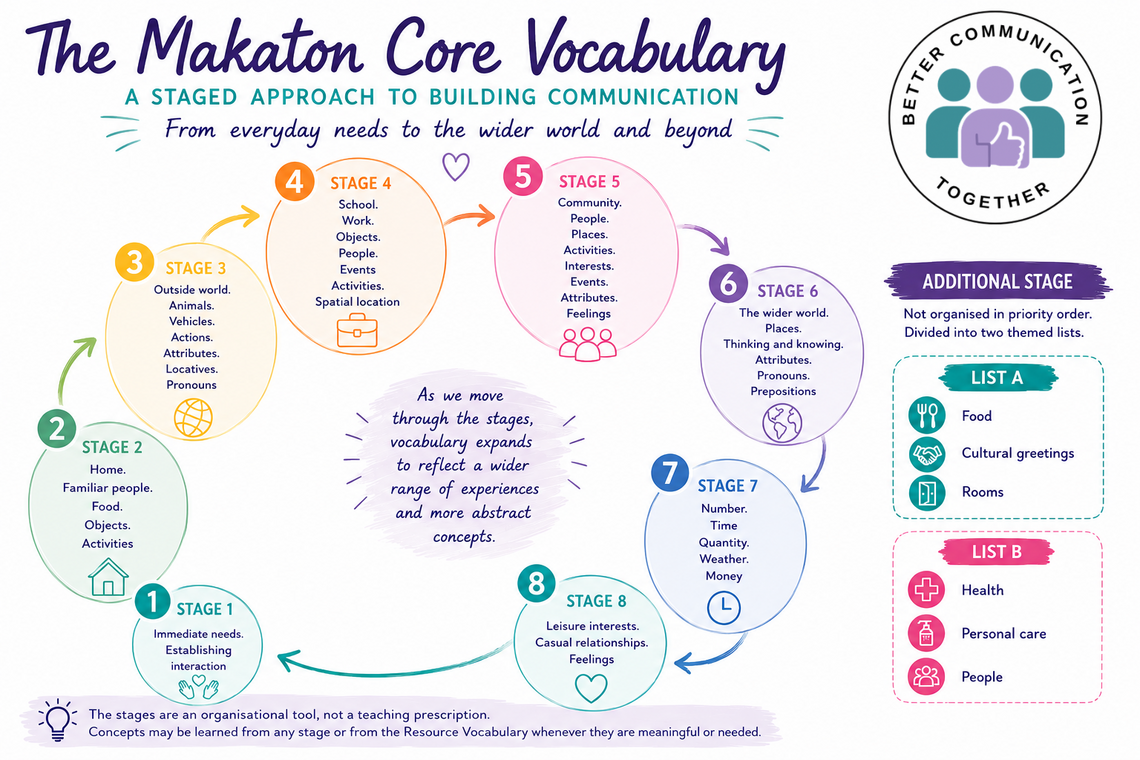
The Core Vocabulary is divided into eight stages. Broadly speaking, the earlier stages focus on immediate needs, familiar people, everyday activities and concrete concepts that many people experience regularly. As the stages progress, the vocabulary reflects an expanding world - school, work, community, relationships, interests and increasingly abstract ideas such as time, quantity and money.
The stages are not a measure of difficulty or importance. They simply provide a structured framework that helps communication develop over time.
When the Core Vocabulary was first revised in 1996, an Additional Stage was introduced.
Unlike Stages 1–8, the Additional Stage is not organised in priority order. Instead, it is divided into two themed lists:
- List A – food, rooms and cultural greetings
- List B – health, personal care and people
Within each list, the concepts are organised by topic and then alphabetically.
It's also important to remember that the stages are an organisational tool, not a teaching prescription. Individuals may learn concepts from different stages—or from the Resource Vocabulary—whenever they are meaningful or needed.
Where did the Core Vocabulary come from?
The Makaton Core Vocabulary didn't appear overnight.
In the early 1970s, speech and language therapist Margaret Walker began researching the language needs of adults with severe communication difficulties. Rather than beginning with a dictionary and deciding which words should be included, Walker observed the concepts people actually needed in order to understand others and express themselves in everyday life. Those observations became the foundation of the Core Vocabulary.
If you'd like to hear the story in Margaret's own words, The Makaton Charity has a wonderful video in which she explains how Makaton first began:
A Brief History of Makaton – Margaret Walker
Since those early days, the Core Vocabulary has been reviewed and refined to reflect changes in language, society and the needs of Makaton users. It is currently undergoing another review, continuing the same process of careful development that began over 50 years ago.
Final thoughts
The Makaton Core Vocabulary isn't about deciding which words are important enough to learn.
It's about identifying the concepts that unlock the greatest number of communication opportunities.
Combined with personalised Resource Vocabulary, it gives people both the flexibility to communicate in everyday situations and the freedom to talk about the things that matter most to them.
It's not about restricting communication.
It's about giving people the strongest possible foundation on which communication can continue to grow throughout life.
One of the biggest misconceptions about Makaton is that the Core Vocabulary is all the vocabulary there is. In reality, it's just the foundation. In my next article, I'll explore the myth that Makaton is "too limited" and explain why the vocabulary is far more extensive than many people realise.
About the author
Nic Pike is Director of Better Communication Together CIC and a Licensed Makaton Tutor and Tutor Training Facilitator. She writes about Makaton, accessible communication and inclusive practice, drawing on over 40 years' professional experience and lived experience as a parent of a Makaton user.
© 2026 Better Communication Together CIC. All rights reserved.
This article is provided for personal learning and information. Please link to this page rather than copying or republishing the content.
Makaton Isn't Just for Young Children
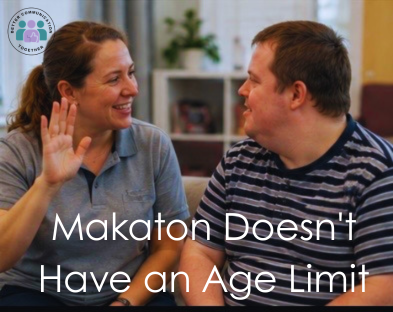
Makaton doesn't have an age limit because communication doesn't have an age limit.
One of the most common misconceptions I come across is that Makaton is something children use until they learn to talk.
I regularly read comments describing Makaton as an approach that "supports young children" or "helps children develop speech." While it certainly can do those things, that's only part of the story.
The idea that Makaton has an expiry date is a myth.
Every person's communication journey is different.
Some people go on to use lots of spoken language. Others use speech and signs together. Some continue to rely mainly on signs and symbols throughout their lives. There isn't a single "right" destination, and communication doesn't stop being important when childhood ends.
I'm the parent of a nearly 19-year-old son. (How did that happen?)
He is non-speaking and uses Makaton every day. If Makaton is only meant for young children, what exactly is he supposed to do now?
Turn 18 and suddenly stop communicating?
Of course not.
The reality is that many teenagers and adults continue to benefit from Makaton throughout their lives. They use it to make choices, build relationships, express opinions, ask for help, enjoy hobbies, tell jokes, join conversations and take part in their communities. Communication doesn't become less important as we get older. If anything, it becomes even more important as we gain independence and make more decisions about our own lives.
The problem isn't that people outgrow Makaton. Too often, the opportunities to learn and use it become much harder to find.
Children may have parents, teachers, teaching assistants and therapists who have had Makaton training. As they move into adult services, that support can become much more limited. There are often fewer opportunities for staff training, fewer organisations investing in communication, and an expectation that people should somehow manage without the support they have relied on for years.
But communication needs don't disappear on someone's eighteenth birthday.
Adults still need to make choices, build friendships, access healthcare, enjoy hobbies, get a job, join community activities and have their voices heard. Makaton can continue to play an important role in making those things possible.
Perhaps the question shouldn't be, "Why are they still using Makaton?"
Perhaps it should be, "Why have we stopped providing people around them with the opportunity to learn it?"
Makaton isn't only valuable for people who have used it since childhood. It can also become an important communication support later in life.
For example, The Makaton Charity has developed Watch My Needs, a workshop designed for adults who are beginning to experience changes in memory, understanding and communication, such as those living with dementia. The focus is on helping people maintain independence, make choices and continue taking part in everyday life, alongside someone who supports them.
That alone challenges the idea that Makaton is "just for children."
From toddlers learning their first words, to teenagers finding their voice, to adults with lifelong communication needs, to older people experiencing changes in memory and understanding, communication support matters at every stage of life.
Makaton isn't about age.
It's about giving people the tools to understand, express themselves and stay connected for as long as those tools are helpful.
From toddlers learning their first words, to teenagers with lifelong communication needs, to adults making choices about work and relationships, to older people living with dementia...
Makaton doesn't have an age limit because communication doesn't have an age limit.
Communication is a lifelong human right. The support we provide shouldn't disappear simply because someone gets older.
About the author
Nic Pike is Director of Better Communication Together CIC and a Licensed Makaton Tutor and Tutor Training Facilitator. She writes about Makaton, accessible communication and inclusive practice, drawing on over 40 years' professional experience and lived experience as a parent of a Makaton user.
© 2026 Better Communication Together CIC. All rights reserved.
This article is provided for personal learning and information. Please link to this page rather than copying or republishing the content.
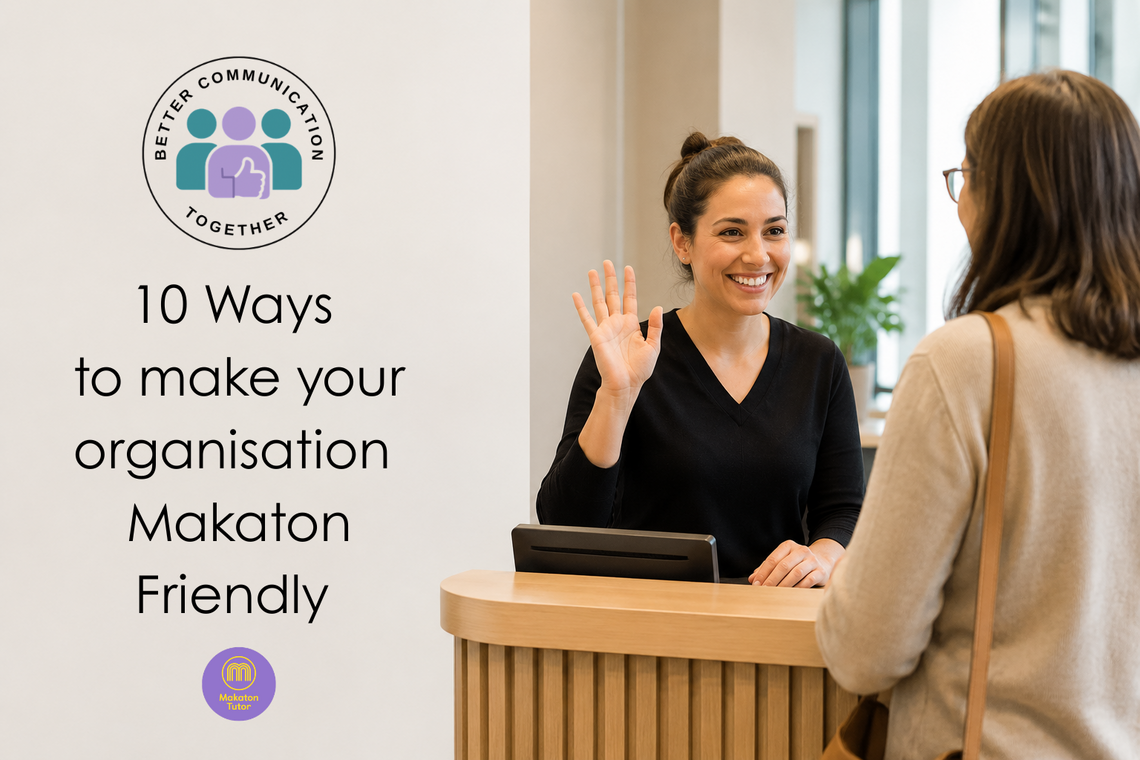
The Makaton Charity's Makaton Places initiative recognises organisations that are committed to inclusive communication through its Makaton Aware and Makaton Friendly schemes. Whether you're working towards one of these recognised standards or simply looking for practical ways to make a difference, every step towards better communication counts.
The good news is that small changes can have a big impact. From using everyday signs and symbols to giving people more time to process information, there are lots of practical ways to create a place where communication can thrive.
Whether you're a school, nursery, workplace, healthcare setting, church, visitor attraction, leisure centre or care provider, creating a Makaton-friendly environment is about much more than learning a few signs. It's about making communication easier, reducing barriers and helping everyone feel included. Here are ten simple ideas to help make your organisation more Makaton friendly.
- Start with a warm welcome
Learn to sign simple greetings like hello, good morning, thank you and goodbye. A friendly signed greeting can instantly make someone feel included.
- Make key information visual
Add Makaton Symbols alongside words on important signs such as:
- Toilets
- Reception
- Café
- Exit
- Lift
- First Aid
- Information
Symbols help many people understand their surroundings more easily.
- Learn the vocabulary you use every day
You don't need to know hundreds of signs.
A café might learn:
- tea
- coffee
- cake
- pay
- finished
A visitor attraction might learn:
- ticket
- toilet
- café
- dinosaur
- playground
Start with what's relevant.
- Encourage everyone to join in
Makaton works best when everyone feels able to use it. Encourage staff to use the signs they know, even if it's only a few.
You don't have to be fluent to make a difference.
- Use signs with speech
Remember that Makaton is designed to support spoken language, not replace it. Say the word as you sign it and remember you don't sign every word - just the most important ones!
- Slow down and give processing time
Signing naturally encourages people to communicate at a more manageable pace. Pause after asking questions and allow time for a response.
- Include Makaton in everyday activities
Use signs during:
- meetings
- songs
- stories
- announcements
- routines
- greetings
- celebrations
The more naturally it's used, the more familiar it becomes.
- Let people know you're committed to inclusive communication
People are more likely to feel confident using your services if they know communication has been considered before they arrive.
If your organisation has achieved Makaton Friendly status through The Makaton Charity's Makaton Places programme, you'll receive resources to help you demonstrate your commitment, including an annual window sticker and certificate, a 6 Steps to Makaton Friendly staff poster, an Ask for Help poster for visitors, and symbol cards to improve navigation around your setting.
These resources don't just raise awareness - they provide practical prompts for staff and reassurance for people who use Makaton and their families that communication is valued.
Even if you're not yet part of the scheme, think about how you can show your commitment to accessible communication. Small visual cues can reassure people that they're welcome and encourage them to communicate in the way that works best for them.
- Keep learning together
Choose a new sign each week or month and encourage everyone to practise it. Small, regular steps are much easier than trying to learn everything at once.
- Remember that communication is about connection
The goal isn't perfect signing. It's making people feel seen, understood and included. Even if you only know a handful of signs, using them with warmth and confidence can make a lasting difference.
About the author
Nic Pike is Director of Better Communication Together CIC and a Licensed Makaton Tutor and Tutor Training Facilitator. She writes about Makaton, accessible communication and inclusive practice, drawing on over 40 years' professional experience and lived experience as a parent of a Makaton user.
© 2026 Better Communication Together CIC. All rights reserved.
This article is provided for personal learning and information. Please link to this page rather than copying or republishing the content.