
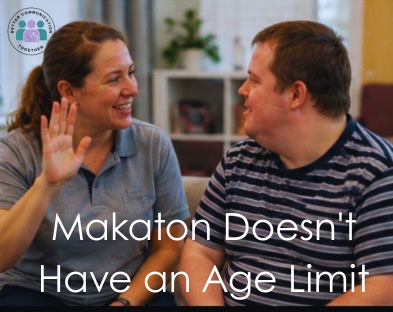
Makaton Isn't Just for Young Children
Makaton doesn't have an age limit because communication doesn't have an age limit.
One of the most common misconceptions I come across is that Makaton is something children use until they learn to talk.
I regularly read comments describing Makaton as an approach that "supports young children" or "helps children develop speech." While it certainly can do those things, that's only part of the story.
The idea that Makaton has an expiry date is a myth.
Every person's communication journey is different.
Some people go on to use lots of spoken language. Others use speech and signs together. Some continue to rely mainly on signs and symbols throughout their lives. There isn't a single "right" destination, and communication doesn't stop being important when childhood ends.
I'm the parent of a nearly 19-year-old son. (How did that happen?)
He is non-speaking and uses Makaton every day. If Makaton is only meant for young children, what exactly is he supposed to do now?
Turn 18 and suddenly stop communicating?
Of course not.
The reality is that many teenagers and adults continue to benefit from Makaton throughout their lives. They use it to make choices, build relationships, express opinions, ask for help, enjoy hobbies, tell jokes, join conversations and take part in their communities. Communication doesn't become less important as we get older. If anything, it becomes even more important as we gain independence and make more decisions about our own lives.
The problem isn't that people outgrow Makaton. Too often, the opportunities to learn and use it become much harder to find.
Children may have parents, teachers, teaching assistants and therapists who have had Makaton training. As they move into adult services, that support can become much more limited. There are often fewer opportunities for staff training, fewer organisations investing in communication, and an expectation that people should somehow manage without the support they have relied on for years.
But communication needs don't disappear on someone's eighteenth birthday.
Adults still need to make choices, build friendships, access healthcare, enjoy hobbies, get a job, join community activities and have their voices heard. Makaton can continue to play an important role in making those things possible.
Perhaps the question shouldn't be, "Why are they still using Makaton?"
Perhaps it should be, "Why have we stopped providing people around them with the opportunity to learn it?"
Makaton isn't only valuable for people who have used it since childhood. It can also become an important communication support later in life.
For example, The Makaton Charity has developed Watch My Needs, a workshop designed for adults who are beginning to experience changes in memory, understanding and communication, such as those living with dementia. The focus is on helping people maintain independence, make choices and continue taking part in everyday life, alongside someone who supports them.
That alone challenges the idea that Makaton is "just for children."
From toddlers learning their first words, to teenagers finding their voice, to adults with lifelong communication needs, to older people experiencing changes in memory and understanding, communication support matters at every stage of life.
Makaton isn't about age.
It's about giving people the tools to understand, express themselves and stay connected for as long as those tools are helpful.
From toddlers learning their first words, to teenagers with lifelong communication needs, to adults making choices about work and relationships, to older people living with dementia...
Makaton doesn't have an age limit because communication doesn't have an age limit.
Communication is a lifelong human right. The support we provide shouldn't disappear simply because someone gets older.
About the author
Nic Pike is Director of Better Communication Together CIC and a Licensed Makaton Tutor and Tutor Training Facilitator. She writes about Makaton, accessible communication and inclusive practice, drawing on over 40 years' professional experience and lived experience as a parent of a Makaton user.
© 2026 Better Communication Together CIC. All rights reserved.
This article is provided for personal learning and information. Please link to this page rather than copying or republishing the content.