
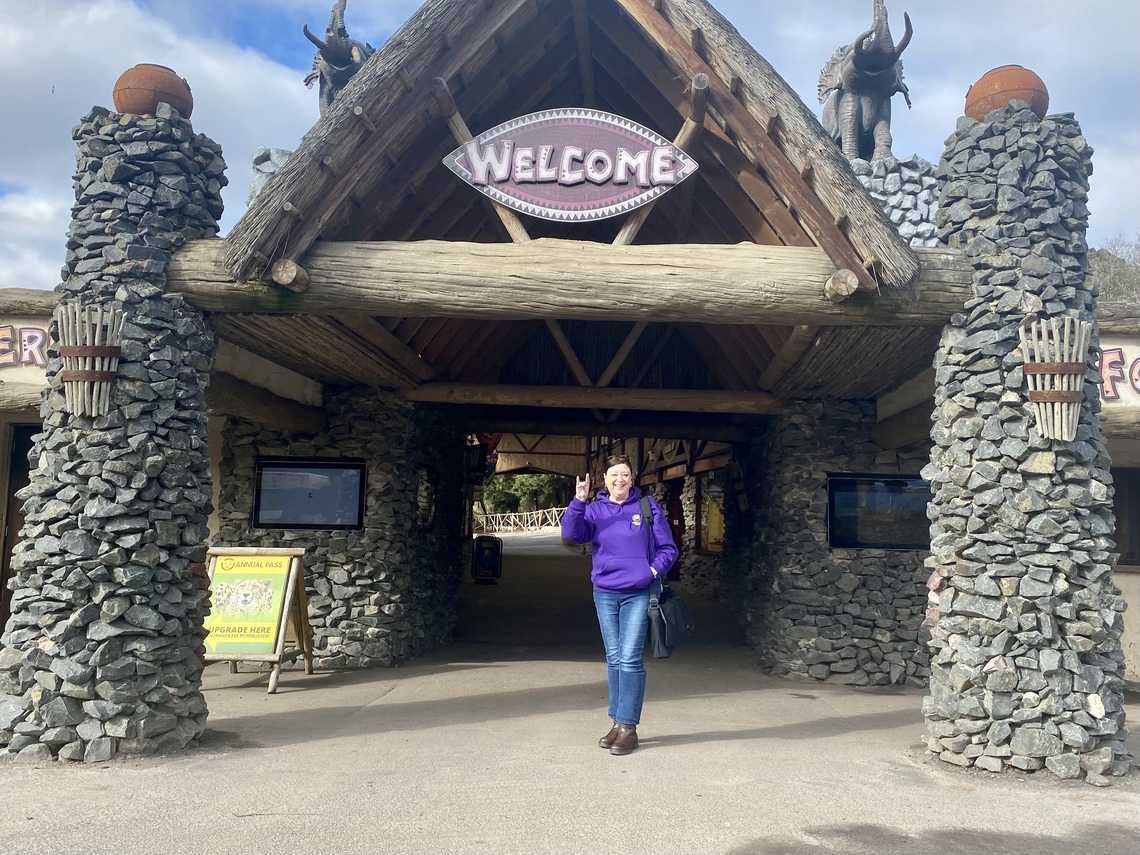
A few years ago, I was invited by an animal park where I regularly provide Makaton training to speak at an ABWAK symposium at West Midlands Safari Park.
ABWAK is the Association of British and Irish Wild Animal Keepers, so I was going to be speaking to people who worked with animals every day. I prepared a Makaton taster session, including an introduction to Makaton, some practical ideas for breaking down communication barriers with visitors, and, of course, some useful animal signs.
All was well.
Until a few days before the symposium, when I happened to read the description of my session in the programme.
It invited delegates to:
“Enjoy a face to face taster session around greeting and breaking down communication barriers for you and your animals…”
For you and your animals?
Suddenly I had a horrible thought.
Did everyone think I was coming to teach them how to use Makaton with the animals?
I’m fairly sure I was reading far too much into the wording, but once the thought had occurred to me, I couldn’t unthink it. What if I arrived ready to talk about making communication more accessible for people, while a roomful of animal keepers were expecting me to teach their animals to sign?
So, just in case, I made a few changes to my presentation.
Who uses Makaton?
One of the things I would usually talk about in a Makaton taster is who uses Makaton and the many different reasons that signs and symbols can support communication.
For this particular audience, I decided to adapt that section slightly.
Alongside the people I would usually talk about, I introduced three rather more unusual examples: Darwin, a seizure alert dog; Bobbi, a speech and language therapy dog; and Koko, the famous signing gorilla.
I wasn't suggesting that these animals were all “Makaton users”. They weren't. But each gave us an interesting way to think about signs, symbols, gestures and communication between humans and animals.
And Darwin's story was particularly close to home.
Alex and Darwin
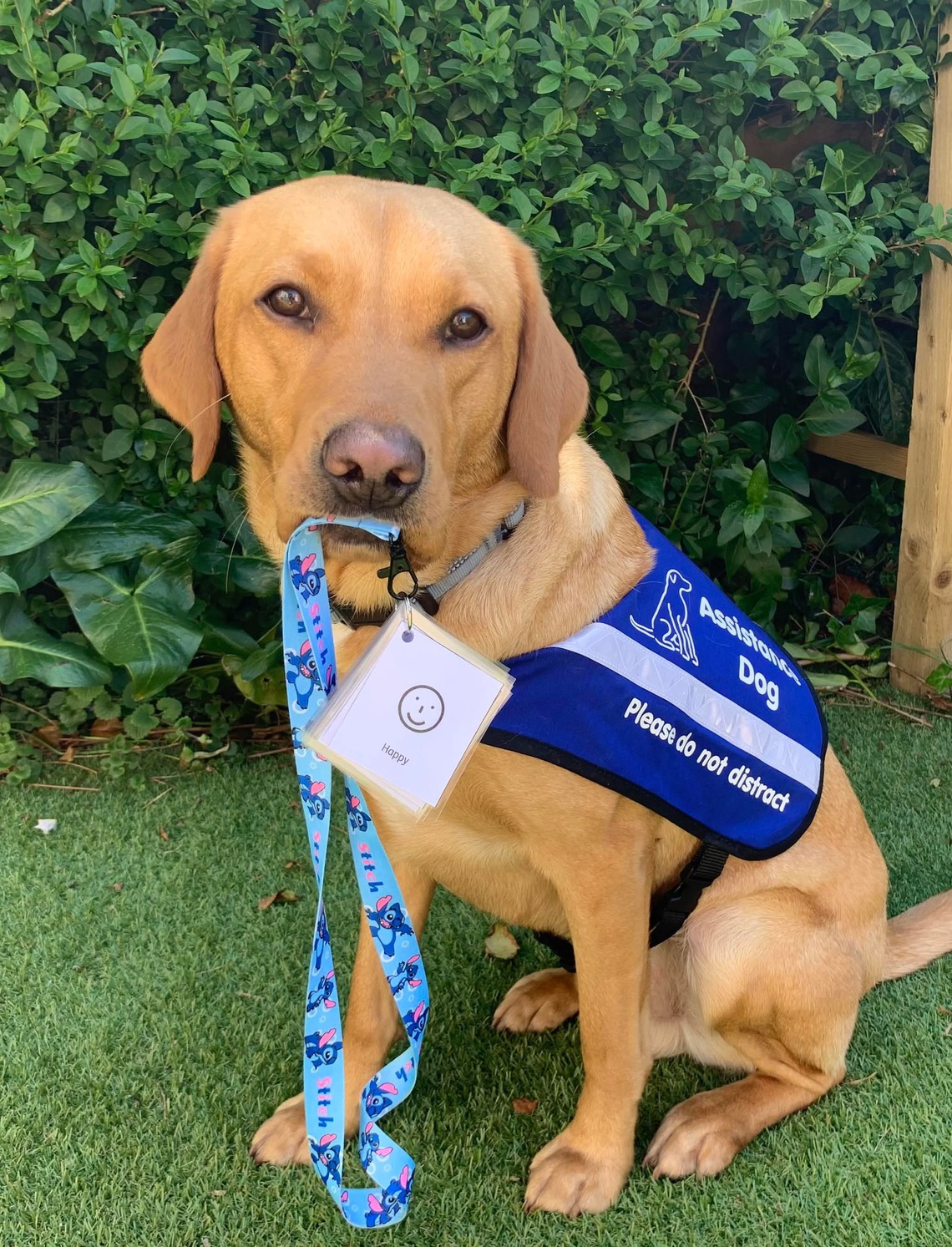
My friend Alex had an assistance dog called Darwin, who was trained as her epilepsy alert dog.
After a seizure, Alex can temporarily lose her ability to speak. That creates a very practical problem: how do you communicate with an assistance dog when you can't give him the spoken instructions he would normally hear?
For Alex and Darwin, Makaton signs provided another way.
Darwin learnt to recognise and respond to signs that Alex used with him. If Alex signed MEDICINE, for example, Darwin could fetch her medication box.
I have a lovely video of the two of them together, with Alex signing instructions and Darwin responding. I'll include it here because it shows something much better than I can describe in words: communication taking place successfully without Alex needing to speak.
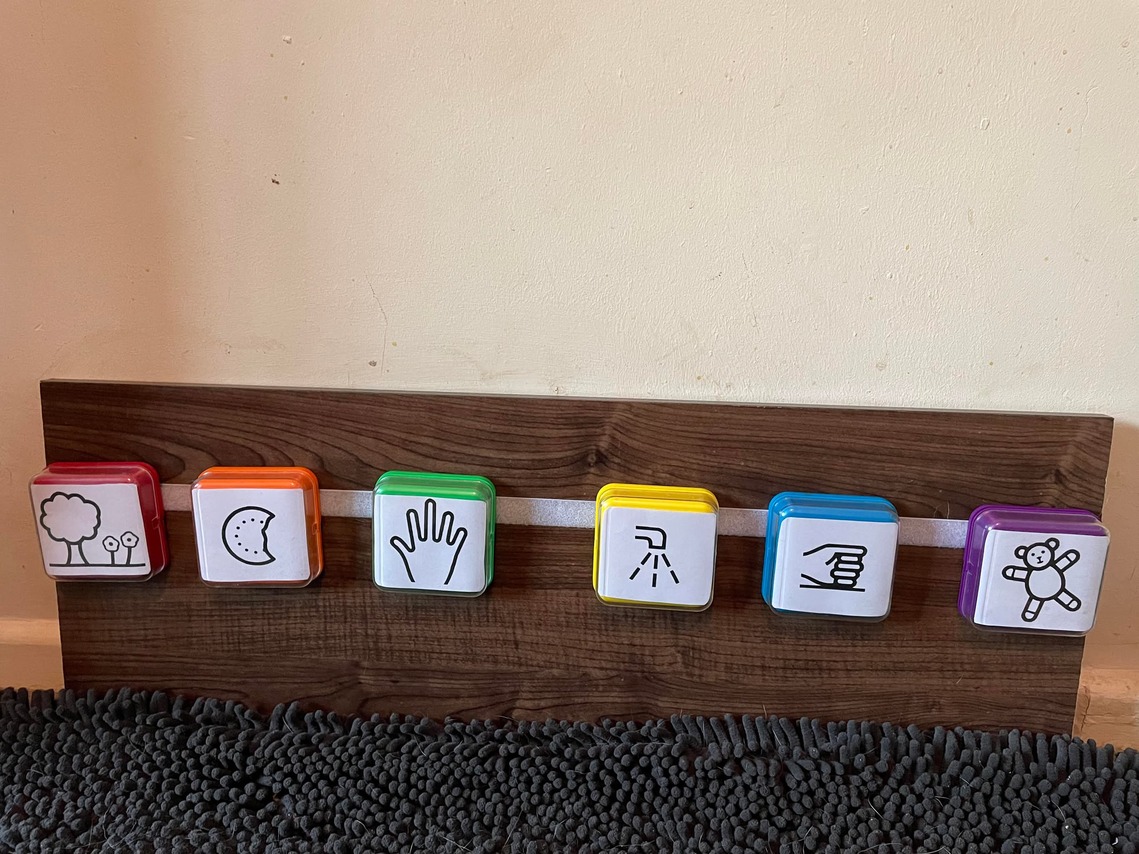
Alex also explored communication in the other direction. Darwin had buttons labelled with Makaton symbols which he could use to make requests, including asking for a treat.
Darwin has sadly since died, but Alex now has Chester and is training him to respond to signs too.
For Alex, there was a very practical reason for teaching Darwin to respond to Makaton signs. After a seizure, speech wasn't always available to her, but she still needed to be able to communicate with him. Signs gave them another way.
Bobbi the Therapy Dog
Another example I included was Bobbi, a therapy dog who worked alongside Speech and Language Therapist and Makaton Tutor Ami Coleman.
Ami decided early on that it made sense to teach Bobbi to respond to Makaton signs. Many of the people she worked with used Makaton, and dogs already respond well to hand signals, so it was a natural addition to her training. Bobbi learnt to recognise a range of signs including TOILET, FOOD, SIT, LIE DOWN, OUTSIDE, BALL, STAY/WAIT, COME and GIVE.
What I particularly liked about Bobbi's story was that it enabled people who used Makaton to communicate directly with her. Rather than needing to give Bobbi a spoken instruction, they could sign and Bobbi could respond.
Ami described this as particularly empowering and motivating for children and adults who weren't using speech, and also found Bobbi a valuable addition to her work with people with anxiety and Selective Mutism.
You can read Ami's blog about Bobbi here
Koko the Gorilla
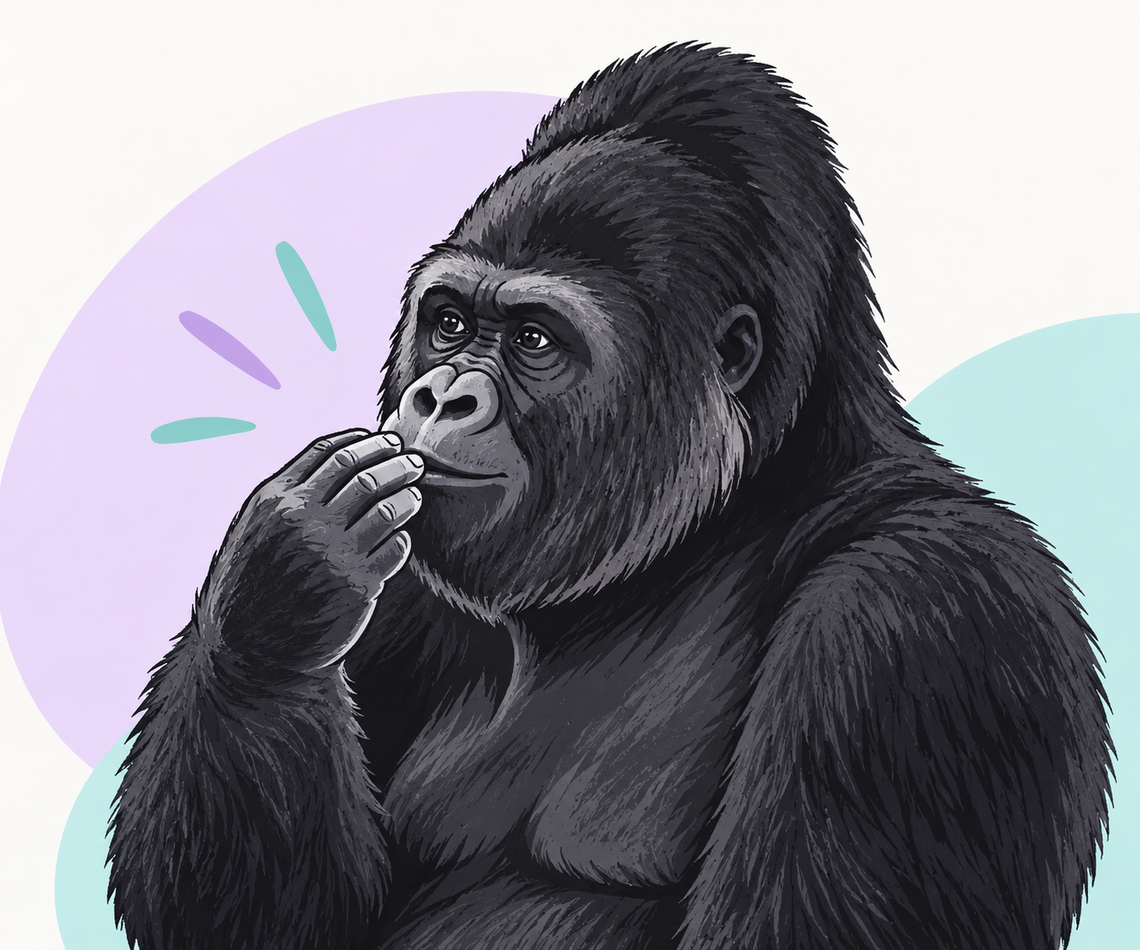
And, of course, once I had started looking at animals and signing, I couldn't leave out perhaps the most famous example of all: Koko the gorilla.
Koko was taught signs by psychologist Dr Francine Penny Patterson, who began working with her in the 1970s. Patterson reported that Koko was able to understand more than 1,000 signs in her lifetime.
Koko wasn't using Makaton. The signs she was taught were based on American Sign Language (ASL), and there has been considerable debate about what Koko's use of signs tells us about animals' ability to acquire and use language.
For my taster session, though, Koko provided another fascinating example from the long history of humans exploring whether signs could be used to communicate with animals.
I probably should have anticipated the discussion that followed. After all, I use signs with my own dog all the time. Not that I was proposing we teach the animals to sign back - I suspect an elephant might encounter a few difficulties with the finer points of Makaton handshapes! But the sea lion keepers were keen to share their own experiences. They used hand signals and gestures when working with the animals as part of their training and care.
So, can animals use Makaton?
There isn't evidence that animals can use Makaton in the way we would normally understand that term. But, as Darwin and Bobbi demonstrated, animals can learn to recognise and respond to Makaton signs. And, as the sea lion keepers reminded me, using visual signals to communicate with animals isn't particularly unusual at all.
What started with a moment of panic over the words “for you and your animals” ended up becoming one of the most interesting parts of the session What started with a moment of panic over the words “for you and your animals” ended up becoming one of the most interesting parts of the session - and a lovely reminder of just how many different ways there are to communicate without relying on speech.
Tags: