
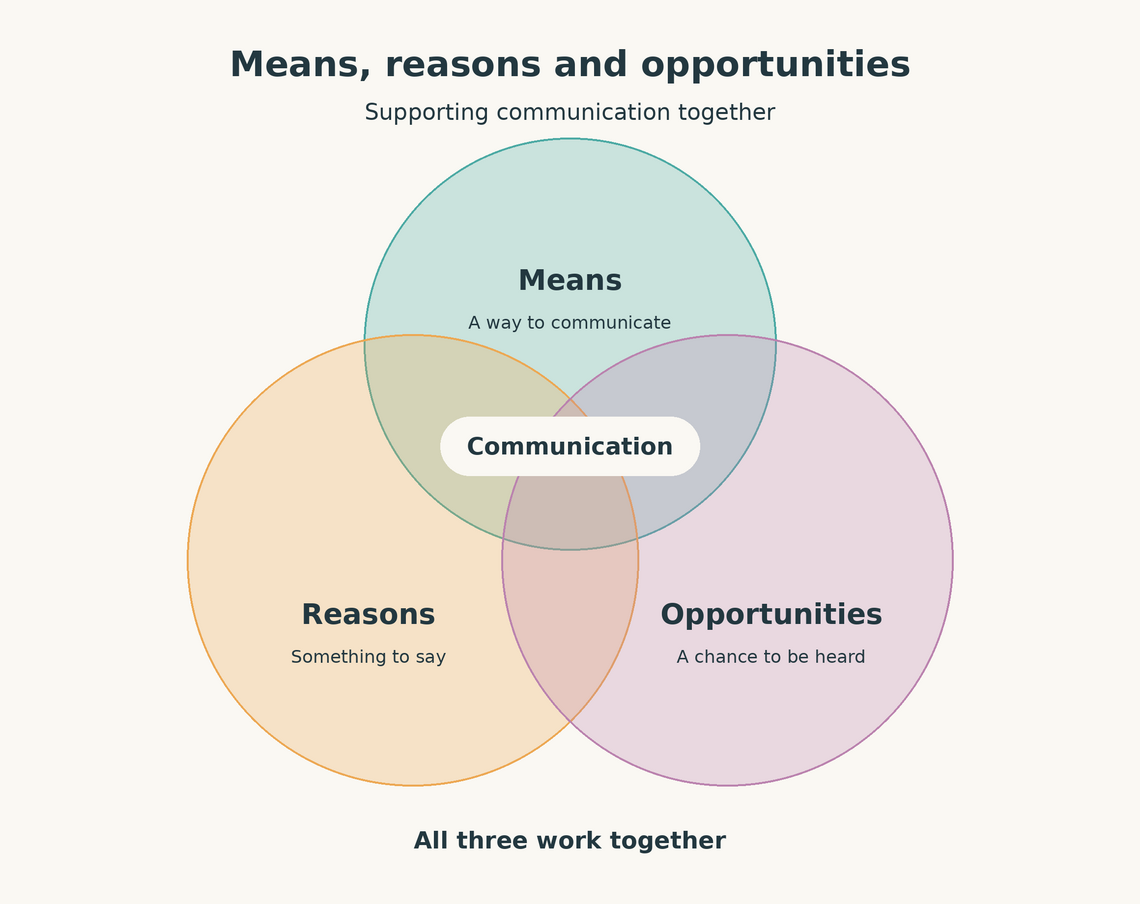
Something to say, a way to say it, and someone who listens
October is AAC Awareness Month, an opportunity to think about the many ways people communicate and what we can do to support them.
A recent post from Elklan got me thinking about the conversations we make possible for people who use communication support.
When we introduce signs or symbols, it’s understandable that we often start with everyday needs. Being able to ask for a drink, something to eat or some help can make a real difference.
But there is so much more someone might want to tell us.
They might want to point out something interesting, share a joke, complain about the music, tell us they’re worried or ask where someone has gone. They might want to join in with the conversation simply because they have something to say.
How do we make room for all of that?
Where does Makaton fit into AAC?
AAC stands for Augmentative and Alternative Communication. It includes ways of communicating that support speech or provide an alternative to it, such as signs, symbols, communication books and boards, and electronic communication aids.
Makaton uses signs, symbols and speech to support understanding and expression. Someone might use Makaton alongside other forms of AAC, using different ways to communicate in different situations.
When thinking about how we support communication through Makaton, a useful framework is means, reasons and opportunities. These three elements help us look beyond the vocabulary someone knows and consider what makes communication possible in everyday life.
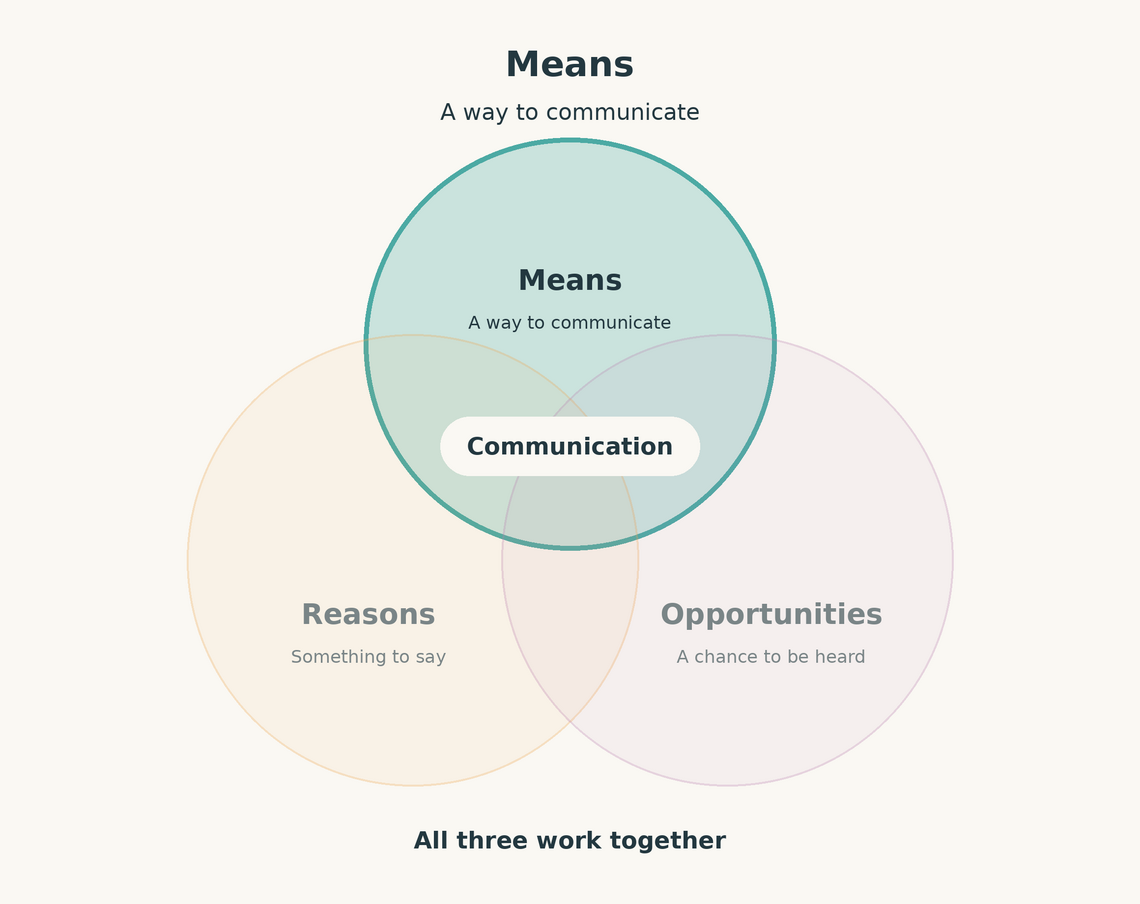
Means: how can I communicate?
The means are the ways someone can get their message across.
That might be a sign, a symbol, a gesture, a facial expression, spoken words or a communication aid. People may use a combination.
For someone using Makaton, we can think about whether they have access to signs and symbols that reflect their interests, relationships and experiences.
Can they tell us something is funny? That they don’t like it? That they want someone to stop? Can they talk about the people and activities that matter to them?
We also need to use signs and symbols ourselves. If we only bring them out when we want someone to answer a question, we give them very few examples of how they can be used in conversation.
We can model them while chatting, sharing a book, discussing our day or noticing something together. They belong in our everyday interactions.
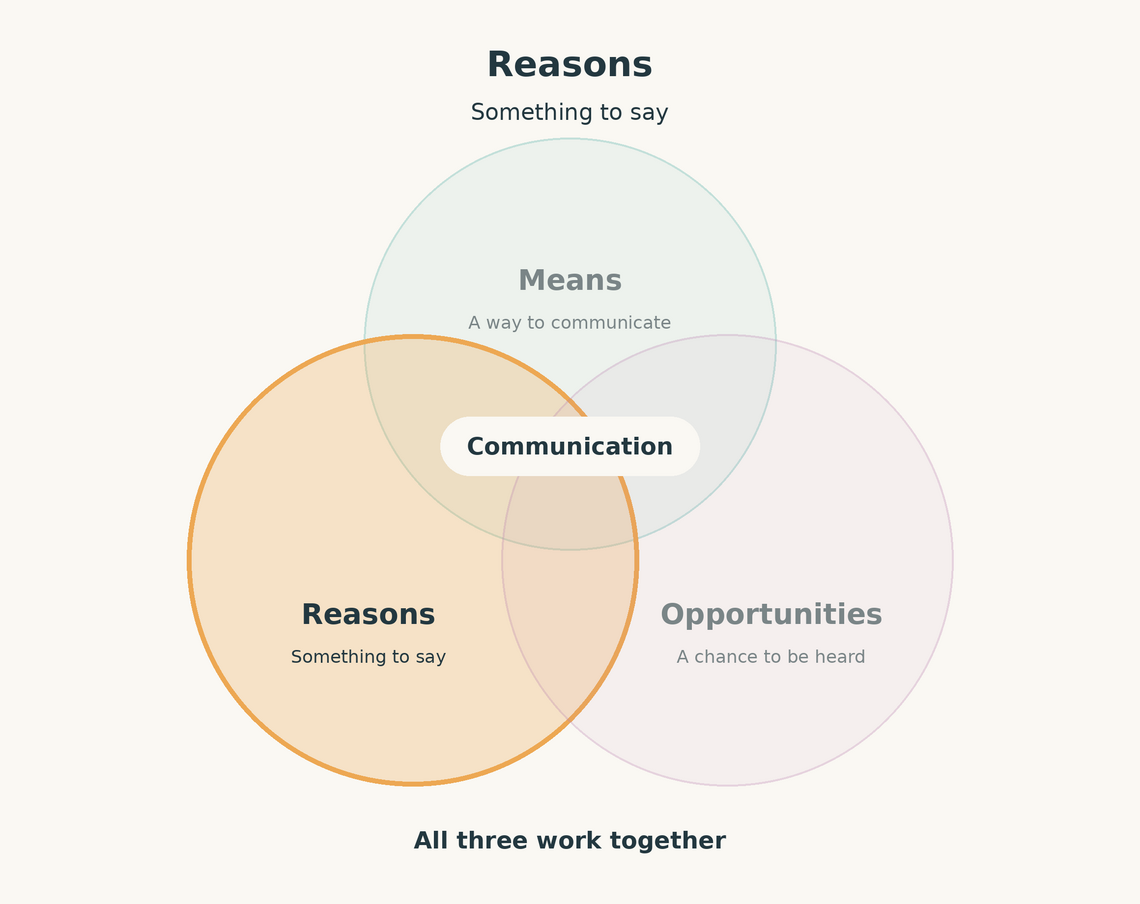
Reasons: what do I want to say?
A reason to communicate might be wanting something, but it could equally be wanting to share something.
Perhaps a dog has walked past wearing a coat. Perhaps someone has done something unexpected. Perhaps a favourite song has started playing and you want everyone to know!
These are all moments worth communicating about.
Following someone’s interests gives us a good starting point. If they love buses, there may be much more to talk about while watching traffic than during an activity we have chosen for them.
We can share observations, make comments and enjoy things together without turning every interaction into a question.
Reasons to communicate can grow from connection, curiosity and enjoyment. We don’t need to manufacture frustration or withhold something someone needs to make them communicate.
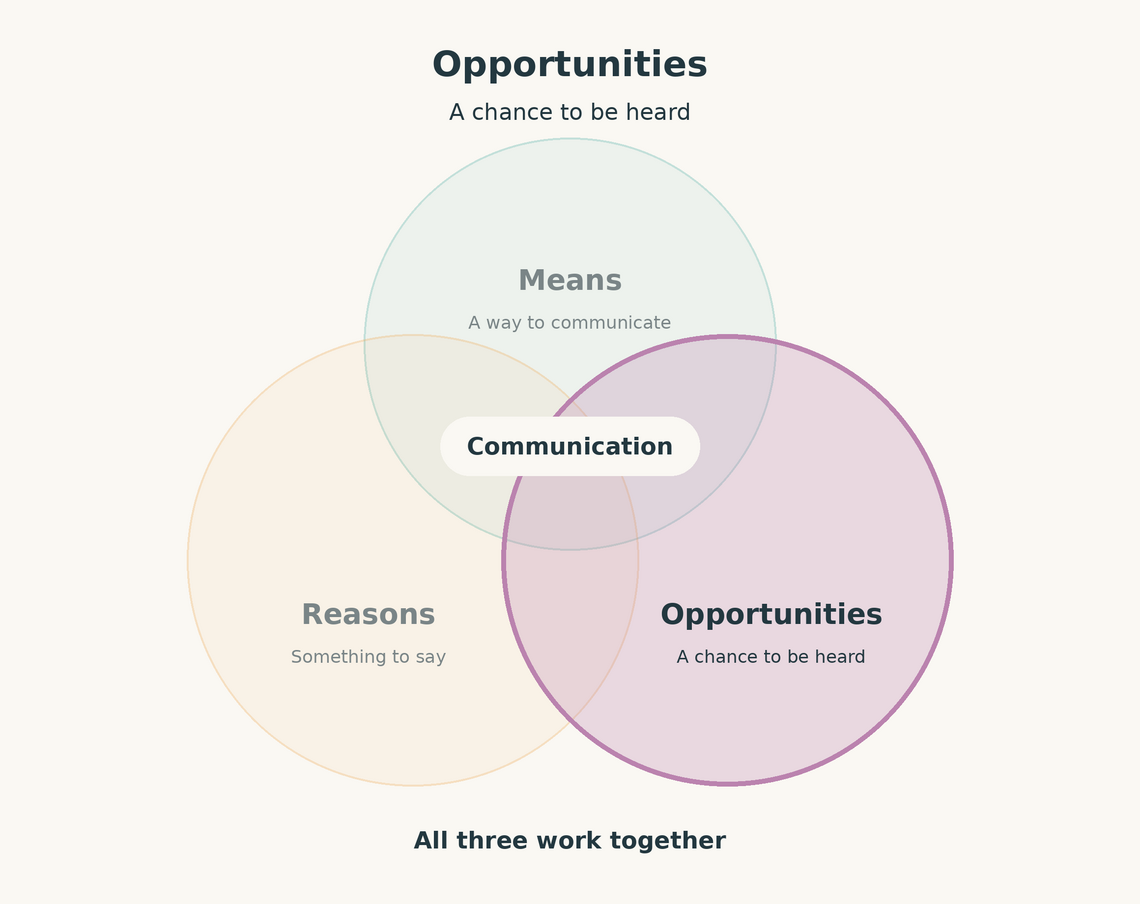
Opportunities: when do I get a turn?
Someone may have a way to communicate and something they want to say, but still struggle to get a turn.
Conversations can move quickly. We might answer for someone, move on too soon or fill a pause before they have had time to respond.
Making space can mean slowing down, waiting and paying attention. It can mean noticing a small gesture or looking towards the symbols someone is trying to show us.
It also means allowing someone to start a conversation, change its direction or decline to join in.
A communication opportunity doesn’t always need to begin with an adult asking a question. Sometimes it begins with us being available and interested.
And when someone communicates, our response matters. If they sign “stop”, do we pause? If they show us something, do we share their interest? If they disagree, do we take their view seriously?
Looking beyond the number of signs
It can be exciting when someone learns a new sign. But the number of signs they know only tells us part of the story.
I’d also want to think about what they can do with those signs, who understands them and whether they have chances to use them throughout their day.
For AAC Awareness Month, try looking at one familiar activity: a meal, a journey, a story or a club session.
Does the person have a way to contribute? Is there something meaningful to talk about? Are we giving them time and space to take part?
Something to say, a way to say it, and someone who listens.
That’s a useful place to start.
About the author
Nic Pike is Director of Better Communication Together CIC and a Licensed Makaton Tutor and Tutor Training Facilitator. She writes about Makaton, accessible communication and inclusive practice, drawing on over 40 years' professional experience and lived experience as a parent of a Makaton user.
© 2026 Better Communication Together CIC. All rights reserved.
This article is provided for personal learning and information. Please link to this page rather than copying or republishing the content.