
You want to learn Makaton, but money is tight. Or perhaps finding time for training feels difficult when you’re juggling work, caring responsibilities and childcare.
Where do you start?
We always recommend attending Makaton training where possible. A workshop gives you the opportunity to learn with a tutor, ask questions, receive feedback and explore how to use signs and symbols in everyday life.
But if training isn’t possible right now, there are reliable resources that can help you get started at home.
Explore your training options
Before ruling training out, it’s worth asking what support might be available locally. Parent carer groups, charities and other organisations sometimes offer funded or subsidised places. Ask whether they have any upcoming opportunities or a waiting list you can join.
Timing and location can make a difference too. Depending on the tutor, workshops may run during the daytime, in the evening or at weekends, both face to face and online.
For working parent carers, an evening workshop might be more manageable. For someone who finds arranging childcare or travelling difficult, an online option could help. You will still need time to participate, but having a choice can make training more workable.
Start with reliable free resources
The Makaton Charity is a good place to begin. Its free resources include vocabulary, activities, songs and stories, and its free Sign of the Week offers another way to practise. A free account gives access to a selection of resources in the Makaton Library. This is different from the wider access available through paid membership.
You don’t need to download everything. Choose something relevant to your everyday life and give yourself time to become familiar with it.
A resource you use regularly is more useful than a folder full of downloads you never open.
Use songs and stories you enjoy
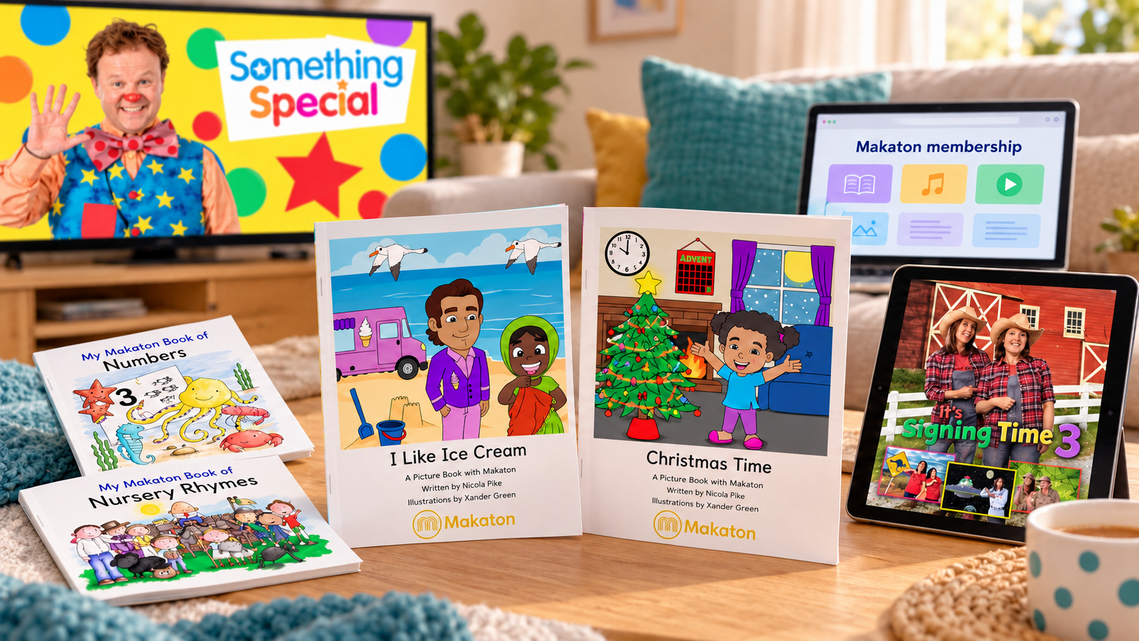
For families with children, Mr Tumble and Something Special can be a familiar starting point, bringing Makaton signs and symbols into songs, play and everyday situations. Watch together and look for something you can use afterwards.
Singing Hands offers free signed songs and stories on YouTube, making it easy to start practising with something you enjoy. Choose something you both like and return to it. You don’t have to keep finding a new video every time
They also have a paid video membership, with hundreds of songs available without adverts, organised by theme and genre. Videos include subtitles and details of the Makaton signs used, with additional content for members. If songs are a favourite in your household, this could be an option to consider within your budget.
Whichever option you use, choose a song you enjoy and return to it. You don’t have to find something new every time. Repetition helps you become familiar with the signs, and you can then look for opportunities to use them beyond the song.
If you have a little budget for books, the Signing Friends series is another option. Each book includes a QR code linking to a video demonstrating the signs, so you can familiarise yourself with them before sharing the story. Symbolised editions are available for some titles too.
My own two books are also options to explore when choosing books to share at home.
You don’t need a whole collection. One well-loved book, read and signed many times, can give you plenty of opportunities to practise.
The next step is to take that vocabulary beyond the song or story. If you have been signing about eating or drinking, try using those signs at snack time too.
Could membership help?
If a regular subscription fits your budget, The Makaton Charity’s paid membership gives access to a much larger library of signs, symbols, demonstration videos and ready-made resources. It can be useful when you want to check a sign or find vocabulary relevant to your family.
Membership also includes events and webinars on a range of subjects, alongside practical “Use it, Don’t lose it!” sessions. These offer opportunities to practise, build confidence and connect with other people using Makaton.
Check the current membership options and costs on the Charity’s website to decide whether it would be useful for you.
Be thoughtful about social media
Social media can be full of ideas and encouragement, but how do you know whether the signs being shared are accurate?
Look for the Makaton Tutor logo and check who is providing the information.
People often share signs they are learning themselves. Their enthusiasm may be lovely, and their intentions good, but the signs may not always be accurate. A popular video isn’t necessarily a reliable teaching resource.
If you’re unsure, check with a Makaton Tutor or use the Charity’s resources. Asking for help is part of learning.
Keep everyday practice manageable
Start with a small number of signs and symbols that have a purpose in your day. Think about what the person you support wants to say, as well as what you want to tell them.
That might include asking for more, saying something is finished, asking for help or talking about something they enjoy.
Try choosing one familiar routine:
- Snack time: say and sign key words as you offer food or drink.
- Play: use signs while enjoying an activity together.
- Story time: practise a few familiar signs as you read.
- Everyday choices: point to relevant symbols as you talk about the options.
Remember symbols too. You can model using a symbol by pointing to it while saying the word. Keep it somewhere useful and accessible, so it becomes part of the activity.
Use the signs and symbols yourself, without turning every interaction into a test or expecting the other person to copy you. Give them time to notice, understand and respond in their own way.
A few useful signs and symbols, used naturally throughout the day, are a manageable place to begin.
Training can help you build on that start, with guidance, feedback and a clearer understanding of how Makaton supports communication. While you explore what’s possible, reliable resources and small, regular opportunities to practise can help you bring Makaton into everyday life.
About the author
Nic Pike is Director of Better Communication Together CIC and a Licensed Makaton Tutor and Tutor Training Facilitator. She writes about Makaton, accessible communication and inclusive practice, drawing on over 40 years' professional experience and lived experience as a parent of a Makaton user.
© 2026 Better Communication Together CIC. All rights reserved.
This article is provided for personal learning and information. Please link to this page rather than copying or republishing the content.